How Preparation Can Determine Learn to Ride Success
Imagine this: You're pushing off on a bike in a large empty parking lot, heart pounding, hands gripping the handlebars for dear life. Your friend swears their technique works. But when you try it, you tense up, wobble, and barely catch yourself before falling. You're doing everything they said, but nothing is clicking.
What if the problem isn't you — it's how your practice session was set up?
Over 8+ years teaching adults to learn to ride, I've seen how preparation makes the difference whether someone learns to ride a bicycle or not.
The preparation areas fall into six categories.
1. Beliefs
Limiting beliefs can quietly work against you before you even get on a bike.
Thoughts like “I’m too old” or “I failed before, so I probably can’t learn” can make you expect failure before you start.
But struggling at first does not mean you are incapable. It often means you need better learning conditions and/or a better learning process.
A more helpful belief is: I can make progress, and learn one step at a time.
That mindset makes it easier to stay engaged long enough to experience small wins.
Want to see the truth vs myth on the common beliefs that might be holding you back? Our 5-Myths blog helps you identify and undo them.
2. Location
Where you practice affects how safe and calm you feel.
A crowded or tight space can keep your brain focused on obstacles instead of learning. Rough or uneven ground can also make balance practice harder and more tiring than it needs to be.
A better practice location is open, quiet, and on a smooth, hard surface that helps you glide more easily.
When the environment feels safer, it becomes easier to relax and learn.
3. Social Environment
A friend or family member may care about you deeply and still not be the right teacher. They may rush you, overwhelm you with advice, or make you feel self-conscious without meaning to. That pressure can make learning harder.
Your emotional safety matters as much as your physical safety. Only bring someone who is patient, calm, and supportive.
The goal is not to impress anyone. The goal is to learn.
4. Bicycle Fit
A bike that doesn't fit your body can make learning feel impossible — even when you're doing everything right.
One student I worked with picked up every early skill quickly, but kept struggling with balance during gliding with both feet off the ground. Additional guidance and reminders did not make a difference in turning the handlebars to balance. Then, I realized the bike was too long for her. Her arms were locked straight. Once she switched to a bike where her elbows could bend when holding the handlebars, she more than tripled her glide time within a few more tries.
I've also experienced this with a saddle that didn't fit. After ~30 minutes of riding, I'd need a 2+ day break from the pain. That kind of discomfort makes consistent practice nearly impossible — and consistency and repetition is how you learn.
A well-fitting bike can help your body feel more natural, more stable, and more capable of responding well.
5. Bicycle Adjustments
Even on the right bike, small adjustments make a big difference.
One woman kept getting wobbly every time she squeezed the brake lever to slow down. After I adjusted the lever so she could reach it easily, she mastered braking within 10 attempts.
Two other students felt stuck for several minutes trying to learn balance — until a simple seat height adjustment to the right level unlocked their progress in minutes.
These aren't advanced fixes. They're quick changes that most people don't know to make. And without them, you'll fight your bike instead of moving with it.
6. Clothing
This one sounds small until it happens to you. Loose pant legs and untucked shoelaces can get caught in a bicycle chain and gears — causing sudden, nasty falls.
It happened to me soon after I learned to pedal. I was lucky — I'd already tasted the freedom of riding, so I recovered and continued to ride. But if it had happened during one of my practice sessions? I almost certainly would have quit before ever experiencing the joy of a real ride.
Don't let something this preventable ruin your chance to learn.
Preparation Is Not Extra
Preparation is not a bonus step. It is part of learning.
When your beliefs, location, support, bike fit, bike adjustments, and clothing are working for you instead of against you, practice can feel more doable. You are more likely to stay calmer, notice progress, and keep going.
And that matters, because delaying preparation often means delaying the confidence, freedom, and independence that bicycling can bring.
It can mean putting off rides with your family, everyday bike trips, or something you may have wanted for years.
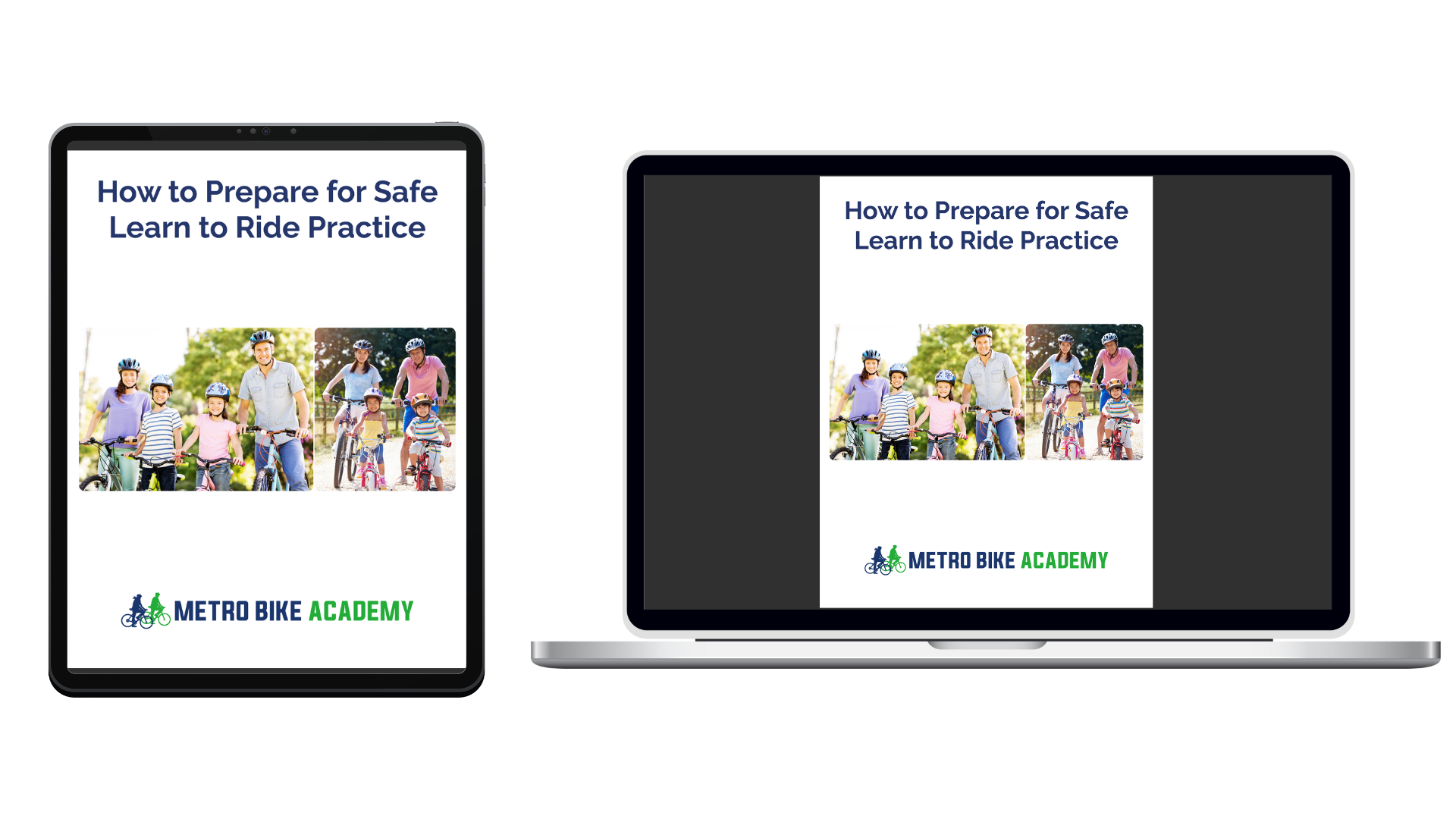
That is why I created the How to Prepare for Safe Learn to Ride Practice Workbook. It walks you through the 4 categories of location, bicycle fit, bicycle adjustments, and clothing so you can eliminate the hidden obstacles that sabotage practice sessions before you start. Bad location. Wrong bike size. Hard to reach brake levers. Loose clothing.
Enter your information below to get the workbook for free and start preparing with more confidence.
And when you're ready to go beyond preparation and actually learn to ride — step by step, without needing to fall,